
There’s a worse feeling than completely bombing an interview.
Thinking you absolutely crushed it, getting excited about the possibility of finally landing a job you REALLY want, and then hearing absolutely nothing back.
I interviewed for an HR Coordinator position that I wanted so badly. Like, really REALLY wanted it. I spent three hours at the facility, staying until 6:30 p.m., going through what felt like an entire hiring process in one afternoon.
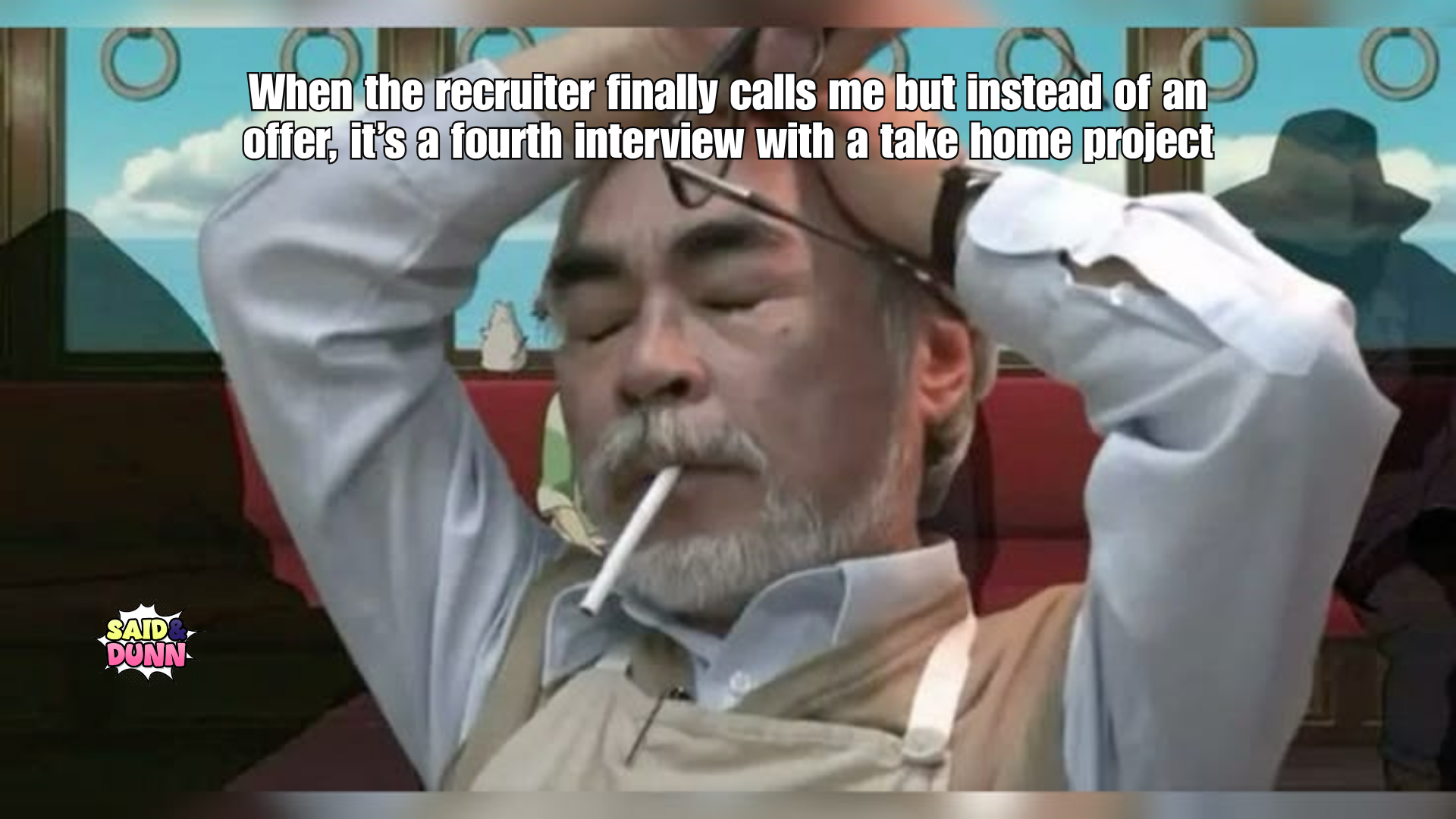
I interviewed with three separate HR managers, spent 45 minutes walking the production floor with their plant manager, and then had a FOURTH interview before leaving.
By the time I walked out, I was practically beaming. I thought the conversations went well, I liked the people I met, and I could genuinely see myself working there. After spending that much time with their team, I figured I’d at least hear something about where things stood.
And the feedback I got afterwards?
Nothing. Absolutely nothing.
As someone who has spent years working in recruiting, I know there are plenty of reasons an interview might not turn into an offer. I’ve been on the other side of those decisions countless times. But knowing how hiring works doesn’t make it any less frustrating when you’re the person waiting for an answer.
Especially when you thought things went well!
Why Does Being Ghosted After an Interview Feel So Personal?
When you’ve invested hours into preparing for an interview, rearranged your schedule to attend, and spent time getting to know a company, expecting some kind of response doesn’t seem like a particularly unreasonable request.
Even a rejection would give you something to work with.
Instead, you’re left wondering what happened. And when we don’t have an explanation for something, we’re pretty good at coming up with our own.
“If I were actually qualified, they would’ve called me back by now.”
“Did I say something wrong? Was there something I should’ve answered differently?”
“Maybe they just didn’t like me.”
It’s easy to replay the entire interview in your head, trying to identify the exact moment you supposedly ruined your chances.
But here’s the frustrating part: You might have done absolutely nothing wrong.
You could’ve been a strong candidate, interviewed well, and still not received an offer. Maybe someone else had experience that was a slightly better fit, or we’ve all heard of the last-minute internal candidate entering the picture. Sometimes the position was put on hold.
There are SO many decisions happening behind the scenes that candidates aren’t necessarily aware of.
And sometimes, the reason you haven’t heard back has very little to do with the actual hiring decision.

So, Why Do Recruiters and Employers Ghost Candidates?
Having worked in recruiting, I’ve seen quite a few reasons candidates stop hearing from employers. Some are understandable, even if the lack of communication isn’t. Others are examples of people simply not doing their jobs.
Here are five reasons it happens.
1. They’re Disorganized and Forgot About You
I wish I could tell you every recruiter has an organized system for tracking candidates, interviews, and follow-ups.
Unfortunately, I’ve worked with recruiters who didn’t maintain their pipelines at all. They relied on candidates to reach back out to them, and if someone didn’t follow up, they were essentially out of sight and out of mind.
Which is a pretty terrible system when your entire job revolves around keeping track of people.
This can become especially problematic in high-volume recruiting environments, where someone might be managing dozens of open positions and hundreds of applicants at once.
A recruiter could have several candidates interviewing for different positions on the same day, all with different hiring managers and timelines. Without a reliable way to track where everyone stands, it’s surprisingly easy for someone to get overlooked.
And if the recruiter is already struggling to stay organized, adding more openings to their workload isn’t exactly going to improve the situation.
Now, I understand that recruiters are human. Things get missed, schedules get hectic, and sometimes someone genuinely forgets to send an update. But there’s a difference between making an occasional mistake and having a process that regularly leaves candidates wondering what happened.
2. They Don’t Want to Deliver Bad News
This one I can understand from a human perspective, even though I don’t agree with how some people handle it.
I’ve been cursed out, hung up on, and threatened after delivering bad news to employees. I’ve also sat on the phone with countless people as they processed losing their jobs and tried to figure out how they were going to pay their bills.
It’s easily one of the worst parts of working in recruiting and HR.
You never know how someone is going to respond. Some people are disappointed but understanding. Others want detailed explanations that you might not be able to provide. And occasionally, someone gets REALLY upset.
I get why recruiters might dread making those calls.
But avoiding them doesn’t make the situation better for the candidate.
In fact, I’d argue that leaving someone waiting indefinitely can be worse than telling them they didn’t get the job. At least with a rejection, they can stop wondering whether an offer might still be coming.
When recruiters aren’t held accountable for communicating with candidates, it’s easy to start putting those uncomfortable conversations off. One gets delayed, another gets forgotten, and eventually, sending rejections becomes something they only do when they have time.
Which, conveniently, they never seem to have.
3. Nobody Ever Taught Them Otherwise
You’d think communicating with candidates would be one of the first things someone learns when becoming a recruiter.
And ideally, it would be!
But recruiting training varies significantly depending on the company. Some organizations have detailed processes for candidate communication, while others essentially hand someone a list of openings and tell them to start finding people.
If the people training you don’t prioritize following up with candidates, there’s a good chance you won’t either.
I’ve seen workplaces where recruiters were primarily evaluated on how many positions they filled, how quickly they filled them, and whether they met their hiring goals.
Candidate communication might be encouraged, but if nobody is checking whether rejected candidates actually receive an update, it’s pretty easy for that responsibility to fall to the bottom of the list. Once everyone around you treats ghosting as normal, it becomes part of how the team operates.
That’s why I think companies need to do more than tell recruiters they should communicate with candidates. They need to establish expectations, provide the tools to meet them, and actually hold people accountable.
Otherwise, they’re essentially relying on individual recruiters to decide how much consideration candidates deserve.
4. They’re Waiting on Someone Who’s Also Ghosting Them
This is one of the more frustrating situations because the recruiter might genuinely be trying to get you an answer.
Sometimes people assume that because they’re communicating with a recruiter, that recruiter is also the person deciding whether they get hired. However, that usually isn’t the case. Recruiters coordinate the process, but hiring managers and other members of leadership are often responsible for making the final decision.
And sometimes, those people are REALLY difficult to get an answer from.
I’ve seen recruiters make repeated phone calls, send emails, follow up through text messages, and even physically show up at another office trying to get feedback from a hiring manager.
And still get nothing.
I’ve heard all their excuses. The manager is overwhelmed with their regular responsibilities and hasn’t gotten to it. They’re waiting for approval from someone above them. They haven’t made a decision and don’t want to communicate anything until they’re certain.
Meanwhile, the recruiter is sitting there with a candidate asking for an update and absolutely nothing new to tell them. When you don’t have an answer for someone, it can feel like calling someone to say “no news yet” is a bother or opening a can of worms.
Most candidates however, would much rather hear, “I haven’t been able to get an update from the hiring manager yet,” than spend weeks wondering whether they’re even being considered anymore.
You don’t need to have the final decision to communicate with someone.
And if the process has stalled for an unreasonable amount of time, I think recruiters should be willing to tell candidates that, too. Even if that means acknowledging that it might be in their best interest to move on.
5. Some Recruiters Simply Don’t Care
I know this isn’t going to be a popular point with everyone in recruiting, but I think it’s worth acknowledging.
Some people are recruiters because they genuinely enjoy helping people find employment and helping companies build their teams. Others are recruiters because it’s the job they happen to have.
And there’s nothing inherently wrong with that. You don’t have to be deeply passionate about your career to be good at it. But you DO have to care enough to do your job properly.
Unfortunately, some recruiters don’t see candidate communication as particularly important once someone is no longer being considered for a position. Their attention moves to the candidates who are still in the running, and everyone else becomes a lower priority.
If their performance is measured almost entirely by placements or filled positions, they may not see much incentive to spend time contacting people who aren’t going to contribute to those numbers.
And while I understand that recruiters have limited time, I don’t think that’s a reasonable excuse for completely disregarding someone who has already invested hours into your hiring process.
Candidates are people who have schedules, responsibilities, and bills to pay. They might be deciding whether to accept another offer or trying to figure out how much longer they can afford to be unemployed.
The least we can do is respect the time they’ve given us.

What Should You Do When an Employer Ghosts You?
I wish there were some magical follow-up email that guaranteed you’d get a response, but unfortunately, there isn’t.
You can do everything right and still end up dealing with someone who won’t communicate. That being said, there are a few things I recommend doing when you find yourself in this situation.
Follow Up, But Don’t Chase Them Forever
If the interviewer gave you a timeline for when you’d hear back, I’d recommend waiting until that date has passed before reaching out. If they didn’t provide one, following up after about a week is reasonable.
Keep your message polite, reiterate your interest in the position, and ask whether there are any updates on the hiring process. If you don’t receive a response, you can follow up once more after another several business days.
After that? I’d leave it alone.
I know how tempting it is to keep reaching out when you REALLY want the position. Especially when you thought the interview went well and you’re hoping that one more email might finally get someone’s attention.
But there’s only so much you can do from your side of the process.
Don’t Assume Their Silence Means You Interviewed Poorly
This is probably the hardest part, especially when you’re already struggling with your job search.
Without feedback, it’s easy to convince yourself that you must have said something wrong. And sure, it’s possible there was something about your interview that influenced their decision. We can’t pretend every interview goes perfectly or that every candidate is the right fit.
But you don’t actually know why they haven’t responded.
Trying to analyze every answer you gave isn’t going to magically reveal what happened behind the scenes, and if there are things you genuinely think you could improve, absolutely work on them. Just don’t assume that being ghosted is proof you did something wrong.
(Sometimes a no isn’t even the end of the story. I got rejected once and got the job two weeks later.)
Keep Applying, Even When You Think You’ve Got the Job
I cannot stress this enough.
Please do not stop applying to other positions just because you had an amazing interview!!!
I know how easy it is to get excited about an opportunity, especially when the company seems interested and you’re already imagining yourself working there. But until you have a confirmed offer and start date, there’s still a chance things won’t work out. Even accepted offers can occasionally fall through.
Continue applying, attending interviews, and considering other opportunities while you’re waiting.
And if another company makes you an offer while you’re still waiting to hear back from your favorite? You can always reach out to ask whether they have an updated timeline before making your decision. You shouldn’t have to put your entire job search on hold because one employer can’t make up their mind.
Take Something Useful Away From the Interview
Even when an interview doesn’t lead anywhere, there’s usually something you can learn from the experience.
Think about the questions you were asked, how comfortable you felt answering them, and whether there were any areas where you struggled to explain your experience. Maybe you came up with a really strong example of something you’ve accomplished. Or you learned more about what employers are looking for in a particular position. Or maybe, you discovered that the job you thought you wanted wasn’t actually what you expected once you got into the interview.
Those are all takeaways you can carry into future opportunities.
And if you genuinely felt good about your performance, let yourself feel good about it! You don’t have to rewrite the entire experience as a failure just because the company didn’t follow through.
Employers Need to Take Candidate Communication More Seriously
I think one of the biggest problems with candidate ghosting is how normalized it’s become.
We talk constantly about candidate experience, employer branding, and the importance of attracting qualified applicants. Companies spend money advertising openings, attending job fairs, and building their reputations as employers.
Then someone spends three hours interviewing with their team, and apparently sending a rejection email is too much to ask.
PLEASE make it make sense.
I understand that hiring can be complicated. Decisions get delayed, priorities change, and recruiters don’t always have control over what happens. Communication shouldn’t disappear just because the process becomes inconvenient.
Even if a company can’t provide detailed feedback, it can still let someone know they’re no longer being considered. And if a decision hasn’t been made, a quick update acknowledging the delay can make a difference.
I still think about that HR Coordinator interview sometimes. I remember how excited I was leaving the facility and how much I wanted the opportunity. I don’t know whether I was their second choice, whether the position changed, or whether they simply forgot to follow up.
And that’s what makes ghosting so frustrating. You’re left trying to make sense of a decision you don’t even know was made.
If you’re dealing with that right now, I hope you don’t let the lack of a response convince you that the interview was a waste of time or that you weren’t qualified enough to be there.
You showed up, you interviewed, and you gave them an opportunity to get to know you.
It’s reasonable to expect them to follow through on their end, too.
Wait, what is this blog?
Hiring. Social media. Internet culture. Gaming.
Long ago, these four topics coexisted peacefully. Then everything changed when I started a blog full of memes.
Subscribe to Said & Dunn to get new articles sent straight to your inbox. No algorithm required.
Discover more from Said & Dunn
Subscribe to get the latest posts sent to your email.