
I wrote a LinkedIn post about someone who received an automated rejection email for a job they had already accepted.
My first instinct was that they probably weren’t actually rejected.
More often than not, it happens when someone has applied to multiple positions within the same company. Once the recruiter moves them forward for one role, they close out the candidate’s other applications in the applicant tracking system (ATS). Depending on how the system is set up, closing those applications can automatically trigger the same rejection email everyone else gets.
Ideally, someone remembers to turn that email off first.
Annnnnd sometimes they don’t.
So if you’ve already signed an offer and suddenly get an email saying, “We’ve decided to move forward with other candidates,” don’t immediately assume your new job disappeared. Reach out to your recruiter or hiring manager and confirm what happened.
There are times, however, when the job did disappear.
And having an offer revoked days or weeks before you’re supposed to start is certainly a reason to cause concern.

Why would a company revoke an offer after you’ve already accepted it?
I’ve seen this happen pretty regularly in manufacturing and temp staffing, especially when hiring was tied directly to production needs.
A company might tell us they needed 20 people starting in two weeks. We would recruit for those openings, get people through the process, and prepare them to start. Then the customer would cancel a project, production needs would change, or demand would drop the Friday before everyone was set up to start.
Suddenly, they didn’t need 20 people anymore.
Those candidates hadn’t done anything wrong, but the work they were being hired to do wasn’t there anymore.
Manufacturing can be especially vulnerable to this because staffing needs are often connected to things happening somewhere else in the supply chain. A customer changes an order, a part doesn’t arrive, a project gets delayed, and eventually that change works its way down to the people who were supposed to be starting Monday.
Corporate hiring has its own versions of this.
Sometimes a position gets posted and goes surprisingly far through the hiring process before someone discovers the headcount was never properly approved. Maybe the manager thought they had approval when they didn’t, or another person higher up the chain still needed to sign off.
This is one reason recruiters can be annoyingly persistent about getting approvals before posting a job. Nobody wants to tell a candidate, “Hey, remember that job you accepted and possibly already gave notice for? Turns out we weren’t actually allowed to hire you.”
Budget changes can cause the same problem. When a company suddenly freezes hiring, announces layoffs, loses a major client, or needs to cut spending, open positions are often one of the first expenses to disappear. That can include positions where someone has already accepted an offer but hasn’t started yet.
It absolutely sucks for the person who planned their life around that offer. They may have already quit another job, stopped interviewing elsewhere, arranged childcare, or made other decisions based on the reasonable assumption that accepting a job meant they had a job.
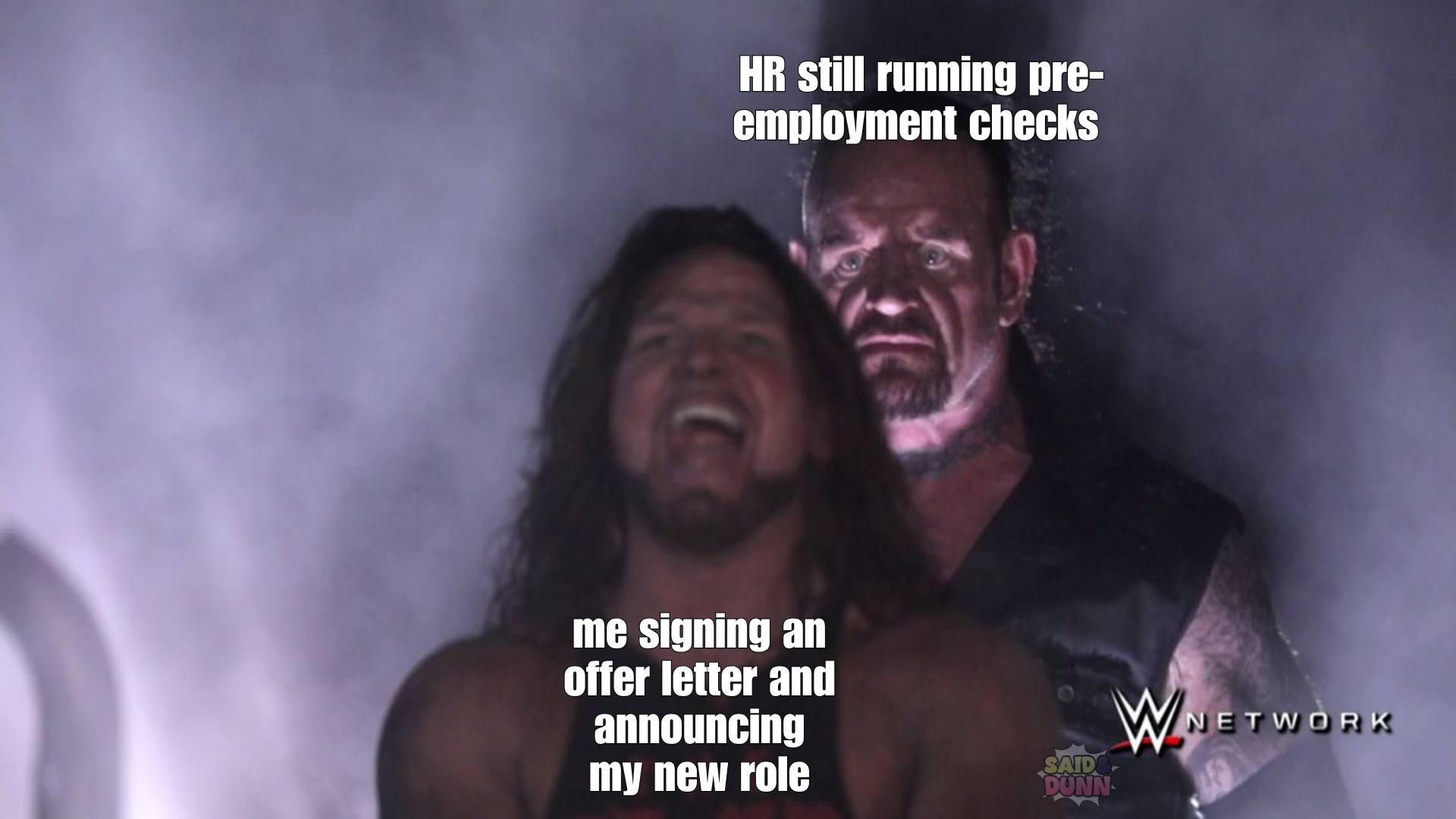
But there are also situations where an offer is revoked because of something that comes up during the candidate’s pre-employment process.

Sometimes it is related to the candidate
A lot of offers are contingent on completing certain requirements before your start date. Depending on the company and position, that could include a background check, drug screen, employment verification, education verification, references or other pre-employment requirements.
Signing the offer doesn’t necessarily mean those contingencies have been cleared.
If your background check or drug screen is still pending, don’t assume everything is finished just because you haven’t heard anything. The same goes for employment and education verification. A significant discrepancy between what you provided and what the company is able to verify can become an issue.
References can occasionally cause problems too, if you choose the wrong ones.
So…how do you prevent your offer from being revoked?
For most of the reasons I’ve described here, you can’t.
I know that’s probably not the comforting answer people want, but I also don’t think it’s helpful to give job seekers another checklist and pretend they can somehow out-organize a company losing a customer or freezing its hiring budget.
There are still a few things within your control.
Once you’ve accepted an offer, stay in communication with the recruiter or whoever is coordinating your onboarding. Complete your background check, drug screen, paperwork and other required steps when they’re sent to you. If you’re supposed to receive something and it never shows up, follow up.
Pay attention when something seems off.
If your start date is approaching and nobody has told you where to go, what time to arrive or what you need for your first day, ask. It may be completely harmless. People get busy, onboarding emails get missed, and recruiters occasionally forget things because we are, tragically, people.
But I’d rather find out on Wednesday that someone forgot to send my first-day instructions than find out Sunday night that something much bigger has been going on.
If you know there’s something that may come up during a background check or verification, be honest but be vague. More information isn’t necessarily better, and it’s entirely up to you what you feel comfortable with sharing.
And until you’ve received confirmation that any required pre-employment checks have cleared, understand that there may still be outstanding contingencies attached to your offer.
None of this guarantees that a company won’t change course.
That’s the most frustrating part of talking about revoked offers. Sometimes people want to know what they did wrong because at least that would give them something to fix for next time.
Sometimes there genuinely isn’t anything.
A company can decide it no longer has the budget. A project can disappear. A customer can cancel an order. Someone can discover that a position never had the approval everyone thought it did.
You can do everything you’re supposed to do and still end up receiving a phone call you absolutely did not expect.
So if your offer gets pulled before your start date, find out why before you start picking apart every decision you made during the interview process.
Typically the answer has very little to do with you.
Like what you just read?
I write about hiring, content creation, internet culture, and whatever else I can’t stop thinking about that week.
Subscribe to Said & Dunn to get new articles sent straight to your inbox. No algorithm required.
Discover more from Said & Dunn
Subscribe to get the latest posts sent to your email.