
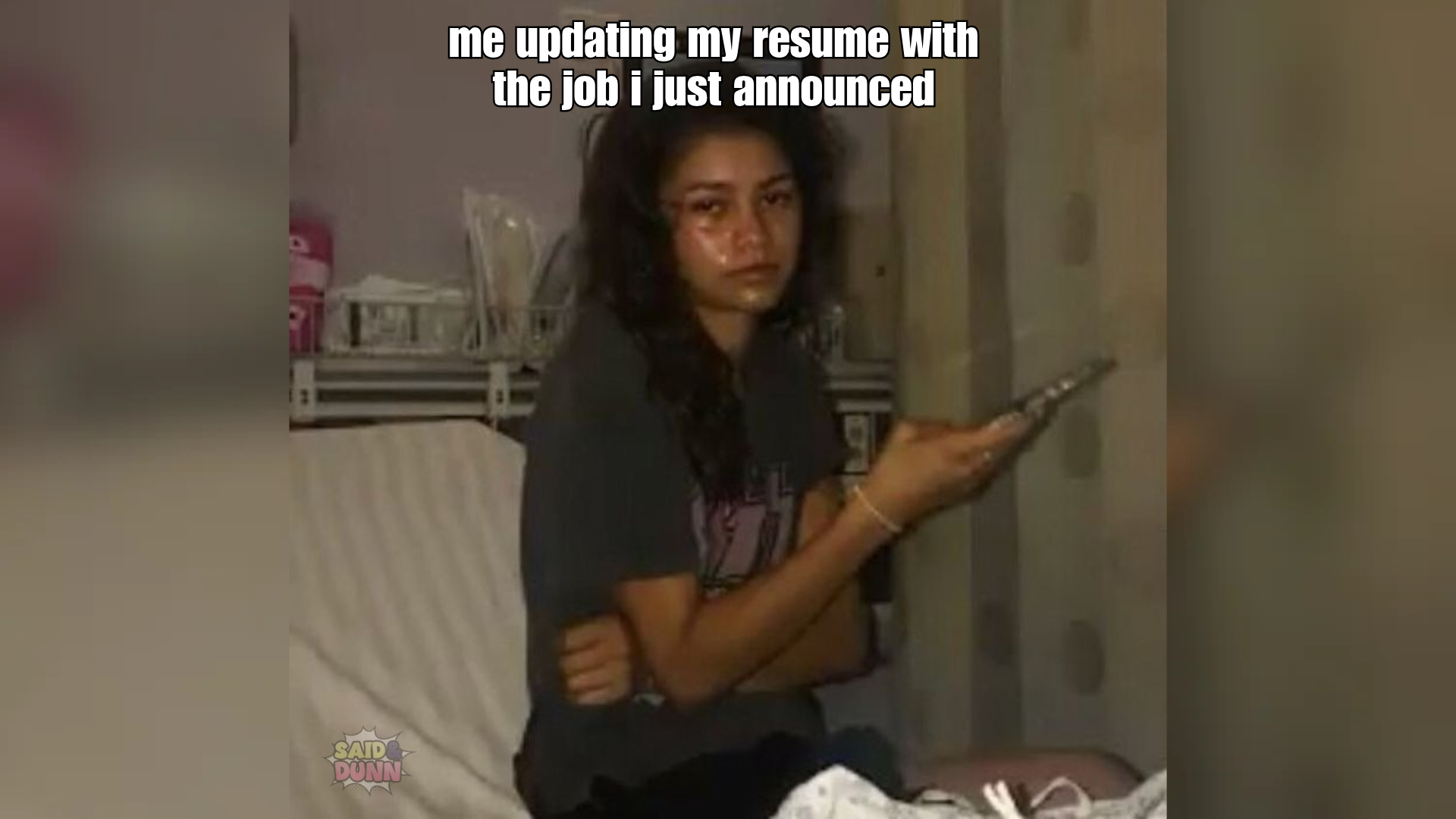
I was about two and a half months into a new job when I got laid off. A new company president had come in, and about a week later, several of us were out.
During the interview process, there had been talk of a “lofty” three-year growth plan. After already going through a layoff earlier that year, I thought I’d found somewhere I could settle in for a while. I was starting to get comfortable with that idea.
Apparently, I needed to keep my resume updated.
That’s advice I give other people all the time, and I hadn’t followed it myself. I knew things could change. I just wasn’t expecting them to change again quite so soon.
Getting laid off sucks, even when you understand that a company is making a business decision. Understanding why layoffs happen doesn’t do much for the immediate realization that you need another job, and you’re back in a process you thought you were done with.
Mine happened on a Thursday afternoon. By Friday, I had updated my resume, made myself easier to find, and started hearing from recruiters. None of that meant I had a job waiting for me, but it gave me something to work with.
Here’s what I did, why I did it, and what I’d suggest taking from it if you find yourself in the same position.
I started with the things I’d need to apply
My resume was the first problem to solve. It didn’t include my most recent role, so even if I found a job I wanted to apply for that night, I wasn’t ready to send anything.
I added that experience and put together three versions: one focused on recruiting, one geared toward more general HR roles, and a master version with the fuller details of my work.
Recruiting is where most of my experience and interest lie, but there’s overlap with HR positions. Having separate versions meant I could make the relevant experience easier to find without starting from scratch every time I opened an application.
The master version gave me somewhere to keep everything. Responsibilities, accomplishments, metrics, and context that might be useful for one position but unnecessary for another. It ended up being close to three pages, which I know makes some people cringe.
That version had a purpose, though. I wanted a fuller record to pull from when tailoring applications, and I used it to provide more detail about my experience on job platforms. The shorter versions were easier to adapt for a particular opening.
If you’re considering a few related kinds of work, this can save you time. A recruiter position and an HR generalist position may draw on some of the same experience, but the person reviewing your application is looking for different things. Having a starting point for each makes those changes more manageable.
I still needed to read the posting and decide what belonged in the application. I just didn’t have to rebuild my entire work history to do it.
I applied when I found something worth applying for
That Thursday night, I saved a job on Indeed with the intention of applying Friday morning. When I went back, the company had stopped accepting applications.
Could that have happened for several reasons? Sure. I don’t know whether they had enough applicants, were already interviewing someone, or changed what they needed. What I knew was that the application had been open when I found it, and it wasn’t open when I returned.
I didn’t take that to mean I needed to spend every waking minute refreshing job boards. But if I found something relevant and had what I needed to apply, I wanted to get the application in.
There’s a difference between making time to send a thoughtful application and saving a posting because you don’t feel like dealing with it yet. I had just been reminded that saving a job doesn’t keep it available.
Having my resume ready made that easier. Instead of finding a role and then facing an overdue resume update, I could focus on whether the position made sense and what experience I needed to highlight.
I made it clear that I was looking
Once my resume was ready, I updated my profiles, refreshed my information on Indeed, and turned on Open to Work.
Then I wrote a post about what had happened.
I wanted people to know what kind of work I was looking for and what I could bring to it, but I wanted the post to sound like me. Someone sharing it should be able to give their connections a useful introduction, and someone who’d never heard of me should get a sense of who I was.
So I explained the situation, talked about my experience, and made a Canva graphic that included what I had to offer, what I cared about, and a little of my humor.
There are plenty of people with recruiting experience and an HR certification. Those things matter, but they weren’t going to tell someone much about how I communicate or what it might be like to work with me. The post gave me room to show more of that.
Within two days, it had reached more than 15,000 people and been shared more than 60 times. That was encouraging, especially when I hadn’t expected to be announcing another job search in the first place.
The useful part was what happened around the post. People reached out with leads, offered to connect me with someone, and checked in. Giving them a clear explanation of what I was looking for made it easier for them to help.
You don’t need a Canva graphic to do that. A straightforward post explaining your experience and the work you’re interested in gives people something they can act on. “Let me know if you hear of anything” leaves a lot for someone else to figure out.
My network had grown since the last time
When I lost my job earlier that year, I didn’t have much of a professional network. I hadn’t spent much time building one.
Over the next ten months, I posted regularly, connected with people across different industries, and shared what I knew about recruiting and looking for work. I was having conversations and getting to know people, including people I probably wouldn’t have met through my job alone.
When I shared that I’d been laid off, those connections responded. They reshared the post, tagged people who might be hiring, and sent messages. Some had leads or referrals. Others offered encouragement, which I appreciated more than I probably would have expected.
A few were people I’d barely spoken with directly. They’d seen my posts or followed my work and had something kind to say about it. That was a strange, overwhelming part of the whole experience: realizing people had been paying attention even when we weren’t regularly talking.
I can’t turn ten months of building relationships into a tip someone can complete the evening they lose their job. If your network is small right now, being told you should have built one earlier isn’t especially useful.
Start with the people who already know your work. Tell them what happened and what you’re looking for. A former coworker may know more about what you can do than someone you’ve been connected with online for years. The point is to give people enough information to recognize a relevant opportunity when they see one.
I paid attention to what came back
By Friday morning, a recruiter from a local staffing agency had called me about a recruiting position, and another had emailed. I hadn’t applied to either opportunity.
Legitimate ones, too. No “choose your own hours and make $2,000 a week” situation.
I’d updated my resume the night before, and now recruiters were finding me. I can’t tell you exactly what put my profile in front of each person, but having current information available meant they could see my recent experience and contact me about it.
From my own recruiting experience, a recently updated profile can be useful context. It gives me a reason to think the person may be active and willing to have a conversation. It doesn’t tell me everything about their situation, but it can help me decide where to start reaching out.
I checked my messages and responded as things came in. Two applications I submitted Friday had prompted next steps, including assessments, by the end of the day. Some of that could have been automated, so I wasn’t treating every notification as evidence that an offer was coming.
Still, I had applications submitted and conversations starting. After the surprise of losing the job, it helped to have something concrete to follow up on.
What I’d take from those first 24 hours
Moving quickly helped me get my information updated and start conversations. I’m glad I did it. But I wouldn’t use my timeline as a deadline for someone else who just got laid off.
Getting that news can leave you trying to process what happened while immediately worrying about what comes next. Updating your resume might feel manageable that evening. It might be the last thing you can concentrate on.
When you start, focus on what will make the next step easier. If your resume is outdated, get your recent experience into it. If people don’t know you’re looking, tell them what kind of work you want. If you find a relevant opening and have a solid application ready, send it.
You don’t have to finish the entire job search before going to bed. Mine certainly wasn’t finished by Friday afternoon.
What I had was a usable resume, current profiles, and people who knew I was available. I still had to keep looking, and I didn’t know which conversations would lead anywhere. But when someone asked what I was looking for or wanted to see my experience, I was ready to answer.
Wait, what is this blog?
Hiring. Social media. Internet culture. Gaming.
Long ago, these four topics coexisted peacefully. Then everything changed when I started a blog full of memes.
Subscribe to Said & Dunn to get new articles sent straight to your inbox. No algorithm required.
Related
Discover more from Said & Dunn
Subscribe to get the latest posts sent to your email.