
You have an interview coming up, so you pull up the company’s website to do some research. You read the About page, scroll past a few pictures of employees smiling in a conference room, and find out that the company values integrity.
Okay. What are you supposed to do with that?
“Research the company” is common interview advice, but it leaves a lot of room for interpretation. You could spend an hour reading their website and still struggle to explain what they actually do. Or you could memorize their mission statement without learning much about the job you’d be doing.
A useful place to start is with two questions: What does this company do, and how would my work fit into it? As you look around, you’ll find information that helps you answer those questions, things you want to ask about, and probably a few gaps. Those gaps can be useful too.
Start with what the company says about itself
The company’s website gives you a starting point for understanding the business. Some sites explain everything clearly while others make you click through six pages of language about “solutions” before you can figure out what anyone is selling.
Try to get specific about their products or services and who uses them. A company that sells scheduling software to hospitals has different customers and demands than one that makes an app for people organizing their personal calendars. Even if you’re applying for a role that doesn’t work directly with customers, understanding who pays for the product helps you understand the work supporting it.
From there, look for information connected to the position. If you’re interviewing for a recruiting job, review their openings. Are they hiring across several locations? Are most of the jobs in one department? That gives you something concrete to ask about when discussing the recruiting team’s workload. If you’re applying for a sales role, spend more time understanding the product, who buys it, and what problem it’s supposed to solve.
Read the mission and values pages, but consider what those statements would mean in practice. If a company emphasizes employee development, you can ask how people learn new skills or move into other roles. The statement gives you a topic to explore; the interview can help you understand what actually happens.
Leadership pages, team information, and recent announcements can fill in more of the picture. You might find a new location, a product launch, or a change in leadership that could affect the role. Check the dates before building a question around an announcement, though. A “new” initiative from four years ago may have gone through several changes since then.
By this point, try explaining the business in a couple of sentences, in your own words. If you’re still struggling, write down what’s unclear. Asking who the company’s main customers are is much more useful than repeating website language you don’t understand.

See what they’re talking about lately
Once you have the basics, take a look at the company’s social accounts. LinkedIn might be useful for hiring updates and business announcements, while other platforms may show more of their products, customer interactions, or public personality. Where you spend time will depend on the company and the role.
Scroll through recent posts and notice what keeps coming up. Maybe they’re promoting a new service, introducing employees at a recently opened location, or advertising several jobs on the same team. You can use those details to ask how current activity connects to the position.
For example, if the company has been posting about expanding into a new market, you might ask:
“I saw that you’re starting to work with customers in a new region. Would this position support that expansion?”
You’ve picked up on something relevant and given the interviewer room to explain it.
Keep some perspective about what social media can tell you. Those posts are selected for a public audience, just like the website. Pictures of a team lunch tell you that a team lunch happened. They won’t tell you whether the manager gives clear feedback or whether people regularly work through lunch the rest of the week.
The same applies to hiring announcements. Several openings might reflect growth, turnover, or a combination of circumstances. Make a note of the activity, then ask what’s behind it.
Read employee reviews for patterns
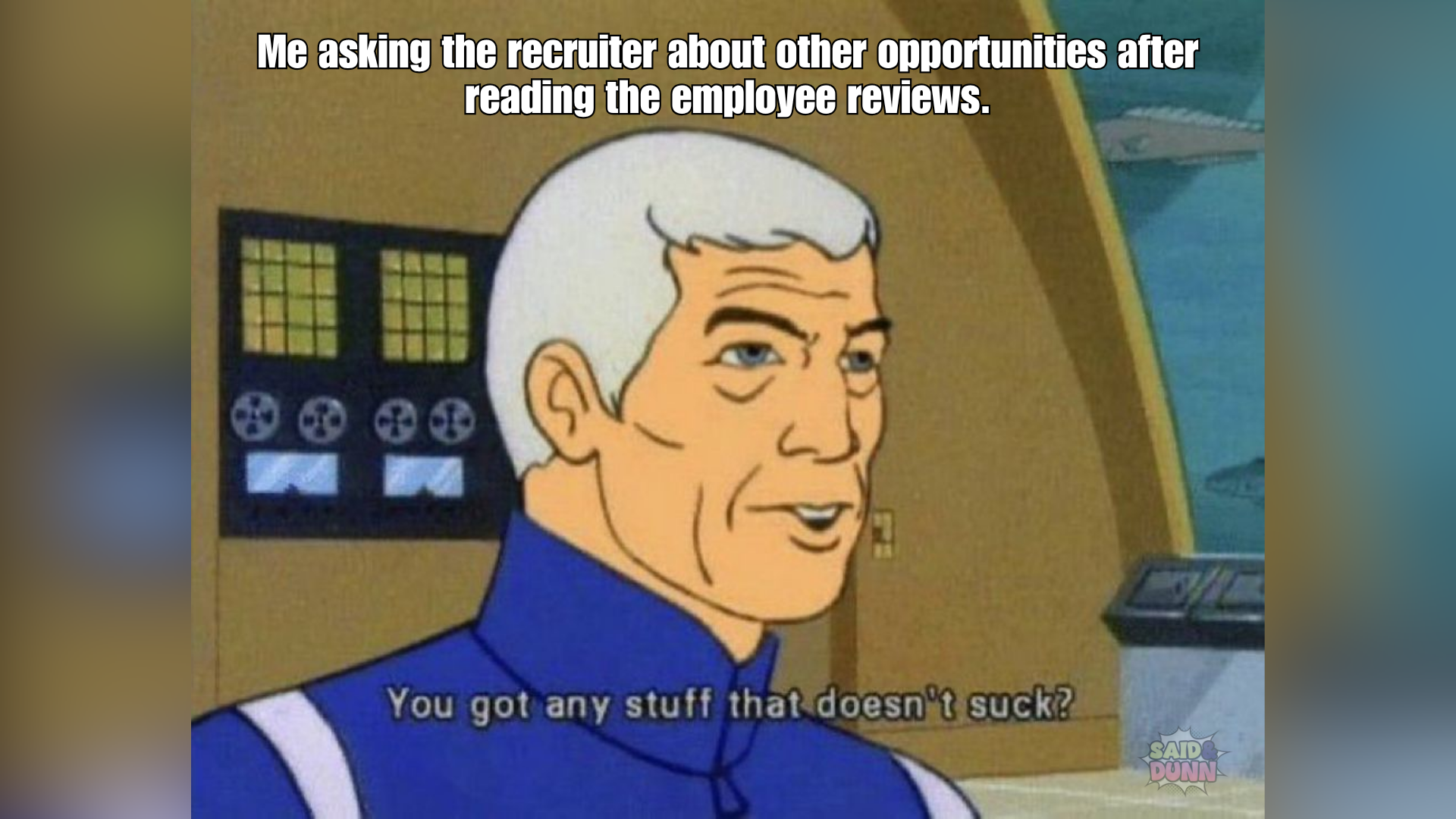
Employee reviews can bring up things you’re unlikely to find on the company’s careers page, including concerns about management, workload, training, or how expectations change once someone starts.
They still need context. One person’s experience may be specific to a certain manager, location, or period of time. However, a review from someone in a different department can raise a useful question without describing the team you’d be joining.
Look for repeated details, especially in recent reviews from people doing similar work. Several comments about changing schedules give you a more specific concern to investigate than a single review saying the company is terrible. Positive reviews deserve the same attention. What do people actually like? Flexible hours? A manager who helps when the workload gets heavy? Clear opportunities to move up?
Then turn those themes into questions you can ask professionally. If reviews repeatedly mention poor training, try:
“What does training look like during the first few weeks, and who would I go to with questions once I start working independently?”
If workload comes up often:
“How does the team handle periods when there’s more work than people can reasonably finish?”
Pay attention to how specific the answers are. “Everyone pitches in” leaves a lot unexplained. An example of how the team handled a busy period gives you more to work with.
Reviews can help you identify concerns worth discussing. You may still finish the interview with uncertainty, particularly if the answers are vague or conflict with what you’ve read. Consider that uncertainty when deciding whether to keep pursuing the job.

Turn your notes into questions you care about
After looking through a few sources, you may have more information than you can use. Go back to the position and think about what you still need to understand.
Suppose the posting mentions supporting several departments, the website shows multiple locations, and employee reviews mention competing priorities. Those details connect to a practical question: Who decides what gets done first?
You could ask:
“When different departments need help at the same time, how are priorities set for this role?”
That question gets closer to what your working day might look like. It’s especially useful if you’ve previously had a job where every request was urgent and nobody agreed on which one came first.
You can take the same approach with other gaps. If you can’t tell why the position is open, ask whether it’s a new role or a replacement. If the responsibilities are broad, ask which ones will take up most of your time. If the company talks about growth, ask how that growth is affecting the team you’d join.
Choose questions whose answers could influence your decision. You may want to understand the company’s long-term direction, but if an unpredictable schedule would make the job impossible for you, make sure you ask about scheduling too.
Use the research to choose better examples
Your research can help you prepare answers as well. Once you understand more about the work, it becomes easier to decide which parts of your experience deserve the most attention.
Say you’re interviewing for a customer support position and learn that the company recently introduced a product. If you’ve helped customers through a product change before, that may be a useful example to prepare. You can explain what customers were confused about, how you learned the new information, and what you did when you couldn’t answer a question.
Be clear about the connection without assuming you know their exact situation:
“I noticed you recently launched a new product. In my last role, I helped customers through a similar change, so I’d be interested to hear what the support team is seeing so far.”
That gives the interviewer something relevant to ask about and a chance to clarify what their team needs.
It can help with “Why do you want to work here?” too. If something you found actually interests you, explain why. Maybe the role would let you use experience you enjoy, work with a product you understand, or take on responsibilities you’ve been trying to build toward.
If their website’s five core values didn’t inspire a profound personal connection, don’t manufacture one. A specific, honest explanation of your interest in the work gives you much more to talk about.
Know when you have enough to work with
You could keep researching until you’ve read every announcement and found every public profile on the team, but some questions will still need a conversation with someone who works there.
Before the interview, keep a short set of notes: your understanding of the business, a few relevant examples from your experience, and the questions you most want answered. Give yourself time to practice explaining those examples instead of using all your preparation time to collect more information.
And if you get into the interview and discover that something works differently than you expected, ask about it. That’s part of what the conversation is for. You’ve done enough research to have somewhere useful to start; now you can find out whether the actual job makes sense for you.
Like what you just read?
I write about hiring, content creation, internet culture, and whatever else I can’t stop thinking about that week.
Subscribe to Said & Dunn to get new articles sent straight to your inbox. No algorithm required.
Discover more from Said & Dunn
Subscribe to get the latest posts sent to your email.